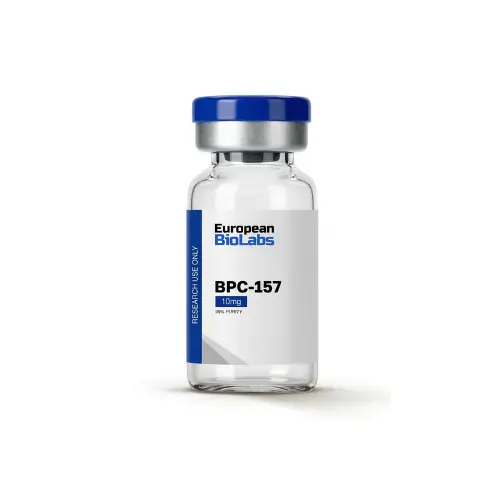
BPC-157 (Body Protection Compound-157) is a synthetic 15-amino-acid peptide that has attracted research interest for its potential effects on tissue repair, gastrointestinal function, vascular biology, and inflammatory processes. Most evidence comes from animal and laboratory studies, while human clinical evidence remains very limited. BPC-157 is therefore considered an investigational peptide, rather than an established medical treatment.
Key Points
Full name: Body Protection Compound-157
Abbreviation: BPC-157
Peptide type: Synthetic pentadecapeptide
Length: 15 amino acids
Research areas: Tissue healing, gastrointestinal protection, inflammation, vascular function, and musculoskeletal research.
Proposed biological effects: Experimental studies suggest possible effects on angiogenesis, nitric-oxide signaling, inflammatory pathways, and tissue-repair processes.
Evidence level: Primarily preclinical; convincing clinical evidence for effectiveness in humans is lacking.
Clinical status: Investigational and not established as an approved treatment.
FDA status: BPC-157 is not an FDA-approved drug. The FDA has identified concerns surrounding its potential use in compounded preparations, including uncertainties regarding safety and product quality.
Human research: A clinical study has investigated BPC-157 (bepecin) for safety and pharmacokinetics, but this does not establish therapeutic efficacy.
Long-term safety: Not adequately established.
Specifications
Chemical name: H-Gly-Glu-Pro-Pro-Pro-Gly-Lys-Pro-Ala-Asp-Asp-Ala-Gly-Leu-Val-OH
Sequence:GEPPPGKPADDAGLV
Peptide length:15 amino acids
Molecular formula:C₆₂H₉₈N₁₆O₂₂
Molecular weight: Approximately 1,419.5 g/mol
CAS number:137525-51-0 for the free base
PubChem CID:9941957
Chemical form: Free-base BPC-157; acetate and TFA salt forms are also documented.
TFA salt molecular weight: Approximately 1,647.6 g/mol.
Pharmacological status: Investigational peptide
Approved indication: None
Approved therapeutic dose: None established
Important: BPC-157 should not be presented as a proven treatment for tendon injuries, ulcers, inflammatory disease, or other medical conditions. Its promising laboratory findings require confirmation through well-controlled human clinical trials before therapeutic benefits and long-term safety can be established.