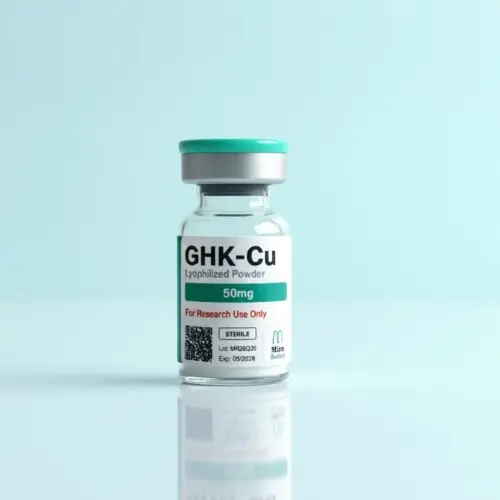
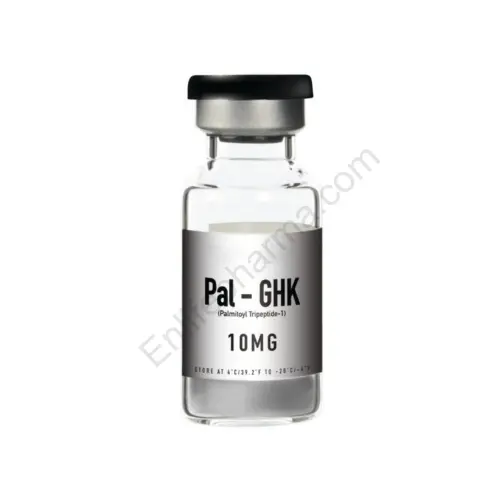
GHK-Cu (Copper Tripeptide) is a naturally occurring copper-binding complex formed from the tripeptide glycyl-L-histidyl-L-lysine (GHK) and copper(II). It has attracted interest in dermatology, wound-healing research, tissue remodeling, and cosmetic science because of its proposed effects on extracellular-matrix processes, inflammation, and tissue repair. Much of the evidence remains preclinical, while human clinical evidence is comparatively limited.
Key Points
Full name: Glycyl-L-histidyl-L-lysine copper complex
Abbreviation: GHK-Cu
Alternative names: Copper tripeptide, Copper tripeptide-1, Prezatide copper
Class: Copper-binding metallopeptide
Parent peptide: Gly-His-Lys (GHK)
Main research areas: Skin regeneration, wound healing, extracellular-matrix remodeling, inflammation, and cosmetic applications.
Proposed biological actions: May influence collagen and extracellular-matrix processes, cellular signaling, angiogenesis, and inflammatory pathways.
Natural occurrence: GHK is a naturally occurring human tripeptide that can bind copper ions.
Cosmetic use: Copper tripeptide-1 is used in some skin- and hair-care formulations.
Clinical evidence: Human studies exist, but evidence is limited and does not establish GHK-Cu as a proven systemic regenerative therapy.
Regulatory status: It is not an FDA-approved drug for a specific therapeutic indication.
Specifications
Chemical name: Copper complex of glycyl-L-histidyl-L-lysine
Peptide sequence:Gly-His-Lys
Peptide length: 3 amino acids
Metal ion: Copper(II), Cu²⁺
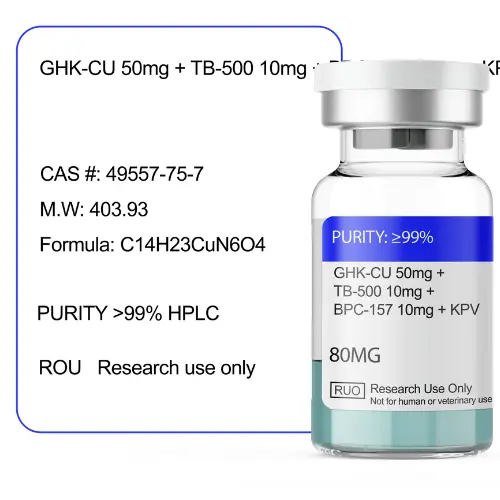
CAS number:89030-95-5 for prezatide copper
Molecular formula: Depending on the chemical representation/speciation, commonly reported around C₁₄H₂₂CuN₆O₄
Molecular weight: Approximately 401.9 g/mol for the neutral 1:1 complex; database records can differ because GHK-Cu exists in different charge/speciation representations.
Chemical structure: 1:1 GHK-to-copper complex is commonly described.
Physical form: Typically supplied as a peptide/copper complex or incorporated into formulated products.
Research routes: Primarily topical and experimental delivery approaches have been investigated.
Approved therapeutic dose: None established.
Approved indication: None.
Important: GHK-Cu should not be confused with the copper-free GHK peptide. The two have different molecular weights and chemical properties, and published sources may use “GHK-Cu” for different chemical species.