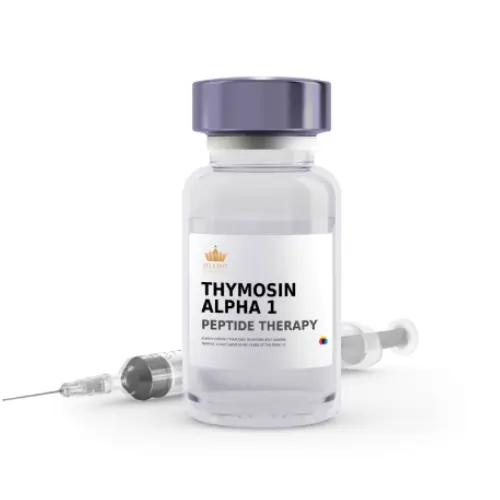
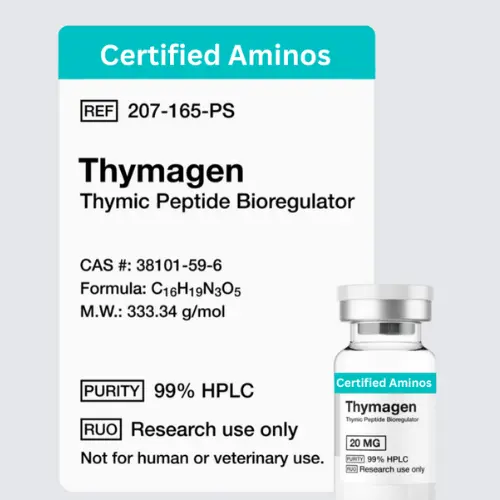
Thymosin Alpha-1 (Tα1), also known as thymalfasin, is a synthetic 28-amino-acid peptide derived from thymosin fraction 5. It has been investigated for its ability to modulate immune responses, including activation of dendritic cells and enhancement of certain innate and adaptive immune functions. It has been studied in conditions involving viral infections, immune dysfunction, and as an adjunct to some vaccines. However, regulatory approval varies substantially by country. In the United States, thymosin alpha-1 products are not FDA-approved, despite orphan-drug designations for several conditions.
Key Points
Full name: Thymosin Alpha-1
Generic/INN name: Thymalfasin
Peptide class: Immunomodulatory peptide
Peptide length: 28 amino acids
Primary biological role: Modulation of immune-system activity
Research areas: Viral infections, immune dysfunction, vaccine response, sepsis, and certain inflammatory conditions.
Proposed mechanism: May influence toll-like receptor signaling, dendritic-cell maturation, cytokine production, and T-cell activity.
Clinical status: Used or approved for selected indications in some countries, but regulatory status differs internationally.
U.S. status: Not FDA-approved; several FDA orphan designations have not resulted in approval.
Safety considerations: FDA has identified concerns regarding potential immunogenicity and peptide-related impurities for certain compounded formulations and routes.
Commonly referenced brand: Zadaxin
Specifications
Chemical name: N-acetyl-L-seryl-L-aspartyl-L-alanyl-L-alanyl-L-valyl-L-aspartyl-L-threonyl-L-seryl-L-seryl-L-glutamyl-L-isoleucyl-L-threonyl-L-threonyl-L-lysyl-L-aspartyl-L-leucyl-L-lysyl-L-glutamyl-L-lysyl-L-lysyl-L-glutamyl-L-valyl-L-valyl-L-glutamyl-L-glutamyl-L-alanyl-L-glutamyl-L-asparagine
Dosage forms: Injectable formulations have been marketed internationally.
Approved U.S. indication: None
Therapeutic dosing: Varies by indication and country; no U.S.-approved dosing regimen exists.
Important: Thymosin Alpha-1 should not be confused with Thymosin Beta-4. Although both are peptides associated with immune or tissue-related research, they have different structures and biological functions. FDA specifically notes that compounded Tα1 may present immunogenicity and peptide-impurity concerns.