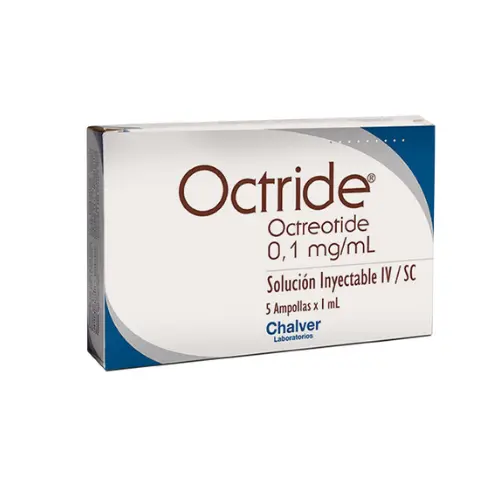
Octreotide is a synthetic analogue of the naturally occurring hormone somatostatin. It is a long-acting cyclic octapeptide that suppresses the release of several hormones and gastrointestinal peptides, particularly growth hormone (GH), glucagon, and insulin. It is primarily used medically to control hormone-related conditions and symptoms associated with certain neuroendocrine tumors.
Key Points
Drug class: Somatostatin analogue
Primary mechanism: Mimics somatostatin and inhibits secretion of GH and several gastrointestinal and pancreatic hormones.
Major indications: Acromegaly, severe diarrhea and flushing associated with metastatic carcinoid tumors, and profuse watery diarrhea associated with VIP-secreting tumors.
Effect in acromegaly: Reduces circulating GH and IGF-1 concentrations.
Administration: Subcutaneous or intravenous injection for immediate-release formulations; long-acting formulations may be administered intramuscularly.
Common adverse effects: Gastrointestinal disturbances, abdominal discomfort, nausea, diarrhea, and injection-site reactions.
Important risks: Gallbladder abnormalities, changes in glucose regulation, bradycardia, and steatorrhea or impaired absorption of dietary fats can occur.
Clinical use: Prescription medicine requiring appropriate medical supervision.
Regulatory status: Approved for specific medical indications; it is not a general-purpose growth-hormone or bodybuilding medication.
Specifications
Generic name: Octreotide
Common pharmaceutical form: Octreotide acetate
Peptide type: Synthetic cyclic octapeptide
Amino-acid sequence: D-Phe-Cys-Phe-D-Trp-Lys-Thr-Cys-Thr(ol), with a disulfide bridge between cysteine residues.
Molecular formula:C₄₉H₆₆N₁₀O₁₀S₂ (free peptide)
Molecular weight: Approximately 1,019.3 g/mol for octreotide acetate.
Dosage forms: Immediate-release injection and long-acting injectable suspension
Injection strengths: Depending on product, commonly 50, 100, or 500 mcg/mL; some multidose products are available at higher concentrations.
Routes: Subcutaneous, intravenous, or intramuscular for specific formulations
Initial U.S. approval:1988.
Storage: Requirements vary according to the specific formulation and manufacturer.
Important: Octreotide dosing and formulation selection depend strongly on the medical indication. It should be used according to the prescribing information and under healthcare-professional supervision.