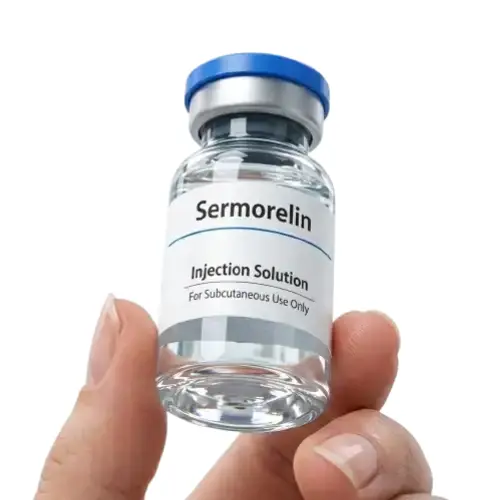
Sermorelin is a synthetic analogue of growth hormone-releasing hormone (GHRH). It consists of the biologically active N-terminal 29-amino-acid portion of human GHRH, with a C-terminal amide. By activating GHRH receptors in the pituitary, sermorelin stimulates the release of the body's own growth hormone. It is therefore pharmacologically different from directly administered recombinant human growth hormone.
Research/clinical areas: Growth-hormone deficiency and evaluation of the GH axis.
Peptide origin: Corresponds to residues 1–29 of human GHRH.
Administration: Historically administered by injection.
Historical brand: Geref.
U.S. status: The former pharmaceutical product was discontinued; sermorelin is not currently an FDA-approved commercial treatment in the United States.
Safety considerations: Potential effects associated with increased GH/IGF-1 activity include fluid retention, headache, joint discomfort, and changes in glucose metabolism.
Important distinction: Sermorelin is not the same as tesamorelin; sermorelin is a 29-amino-acid GHRH fragment, whereas tesamorelin is a modified 44-amino-acid GHRH analogue.
Specifications
Generic name: Sermorelin
Common salt: Sermorelin acetate
Peptide length:29 amino acids
Sequence:YADAIFTNSYRKVLGQLSARKLLQDIMSR-NH₂
Molecular formula:C₁₄₉H₂₄₆N₄₄O₄₂S
Molecular weight: Approximately 3,357.9 g/mol for the peptide.
Approved therapeutic dose: No currently approved U.S. dosing regimen
Approved indication in the U.S.: None currently marketed
Important: Sermorelin should not be confused with growth hormone itself. Because it stimulates endogenous GH secretion, its effects depend partly on the functioning of the patient's hypothalamic–pituitary growth-hormone axis. Its use should be determined by an appropriately qualified healthcare professional.