Exenatide is a glucagon-like peptide-1 (GLP-1) receptor agonist used to improve blood-glucose control in people with type 2 diabetes mellitus. It works by enhancing glucose-dependent insulin secretion, reducing inappropriate glucagon secretion, and slowing gastric emptying. These effects can help reduce both fasting and post-meal blood glucose levels. Exenatide is available in immediate-release and extended-release formulations with different dosing schedules.
Key Points
Drug class: GLP-1 receptor agonist
Primary indication: Adjunct to diet and exercise for glycemic control in type 2 diabetes.
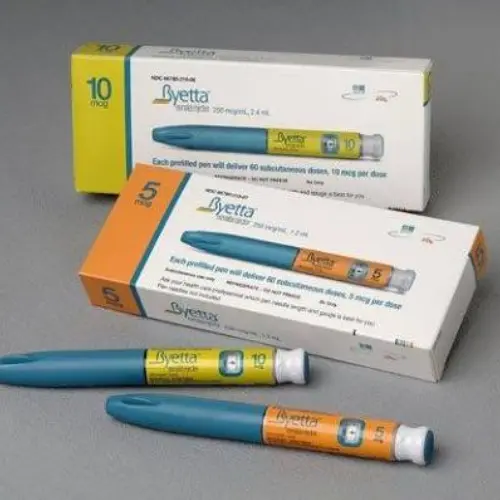
Immediate-release dosing: Usually started at 5 mcg twice daily, with an increase to 10 mcg twice daily after approximately one month based on clinical response.
Timing: Immediate-release exenatide is administered within 60 minutes before the morning and evening meals, or before two main meals at least about 6 hours apart.
Extended-release dosing:2 mg once every 7 days for the extended-release formulation.
Common adverse effects: Nausea, vomiting, diarrhea, decreased appetite, and injection-site reactions.
Important risks: Pancreatitis, kidney-related complications associated with dehydration, and serious hypersensitivity reactions have been reported.
Limitation: Exenatide is not a substitute for insulin and is not indicated for type 1 diabetes or diabetic ketoacidosis.
Specifications
Generic name: Exenatide
Molecular type: Synthetic peptide
Pharmacological class: GLP-1 receptor agonist
Route: Subcutaneous
Immediate-release strengths: 5 mcg/dose and 10 mcg/dose
Immediate-release concentration: 250 mcg/mL
Extended-release strength: 2 mg per dose
Formulations: Immediate-release injection and extended-release injectable suspension
Note: Exenatide is a prescription medicine and should be used according to a healthcare professional's instructions, particularly when combined with other glucose-lowering medicines.